Thermal imaging inspection of PV systems

A professional thermographic inspection can identify thermal anomalies in PV systems at an early stage. This allows hotspots, defects, contact issues, or unusual temperature patterns to be detected before they lead to significant yield losses, safety risks, or costly consequential damage. 2nd Cycle supports operators, investors, and technical managers in the structured assessment of PV systems.  

Request a thermography inspection now

Why is thermography so important for solar power systems?

Many issues in photovoltaic systems are not visible to the naked eye or are very difficult to detect. Thermography makes temperature differences visible and helps pinpoint problematic modules, cell areas, or connection components. It is a valuable tool for quickly assessing the condition of a system, particularly in cases of unexplained yield losses, suspected hotspots, after storm damage, or prior to a repowering project.

What does a thermographic inspection detect?

Thermography is a non-destructive method for detecting temperature anomalies during operation. It provides important clues about technical issues and aids in targeted fault diagnosis.

Drohnen-Thermografie · PV-Inspektion
Drone Thermography · PV Inspection

Typische PV-Fehler per Infrarot-Drohne erkennen

Common PV Defects Detected by Infrared Drone Inspection

Thermografische Drohneninspektionen decken verborgene Defekte in Photovoltaik-Anlagen auf – schnell, berührungslos und zerstörungsfrei. Hier finden Sie die häufigsten Fehlermuster, deren Ursachen, Gefahrenpotenzial und Handlungsempfehlungen.

Thermographic drone inspections reveal hidden defects in photovoltaic systems — fast, contactless, and non-destructive. Below you will find the most common defect patterns, their root causes, risk levels, and recommended actions.

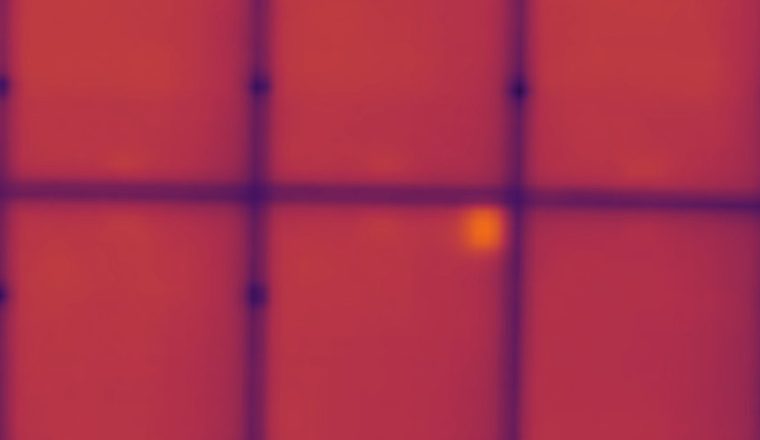
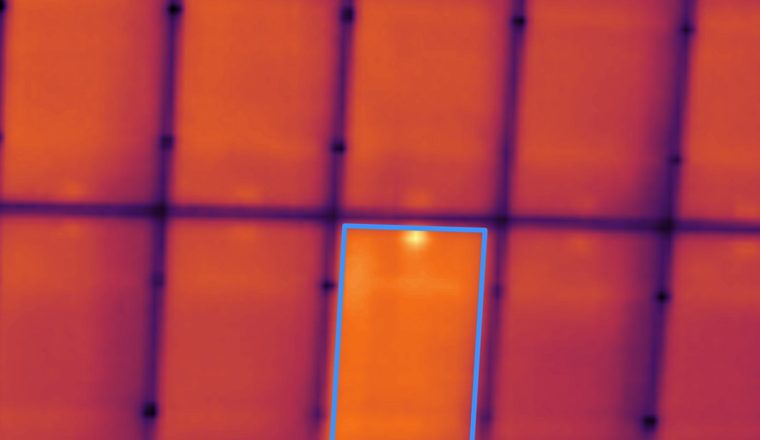
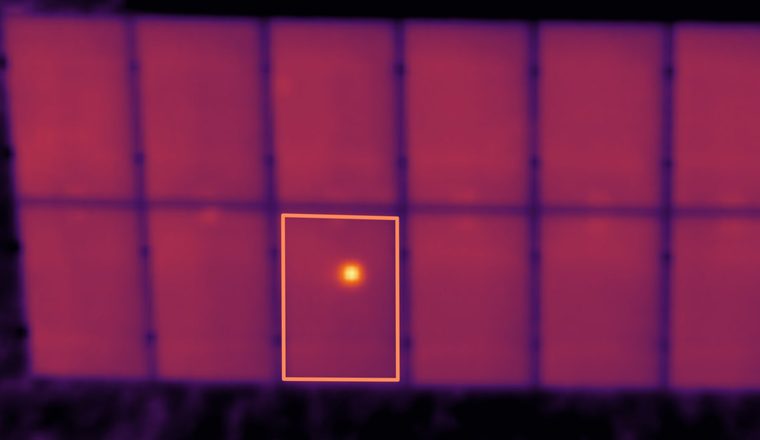
Thermografie Hotspot PV-Modul – lokale Überhitzung einer Solarzelle im Infrarotbild #01 Brandgefahr Fire Risk

Hotspot

Lokale Überhitzung einer Zelle
Localized cell overheating

Ein einzelner Punkt oder eine Zelle zeigt eine deutlich höhere Temperatur als die Umgebung. Im IR-Bild als leuchtend heller Fleck sichtbar – oft über 80 °C.

A single point or cell shows significantly higher temperature than its surroundings. Visible as a bright spot in IR imagery — often exceeding 80 °C.

Ursache
Cause
Verschattung, defekte Bypassdiode, Mikrorisse oder verschmutzte Zellen.
Shading, defective bypass diode, microcracks, or soiled cells.
Behebung
Remedy
Modul tauschen oder Bypassdiode ersetzen. Verschattungsquelle entfernen.
Replace module or bypass diode. Remove shading source.
Gefährdung
Risk Level
Hoch – Rückseitenfolie kann schmelzen, im Extremfall Modulbrand.
High — backsheet may melt, module fire in extreme cases.
Erkennung
Detection
IR-Drohne, FLIR, ΔT > 20 K
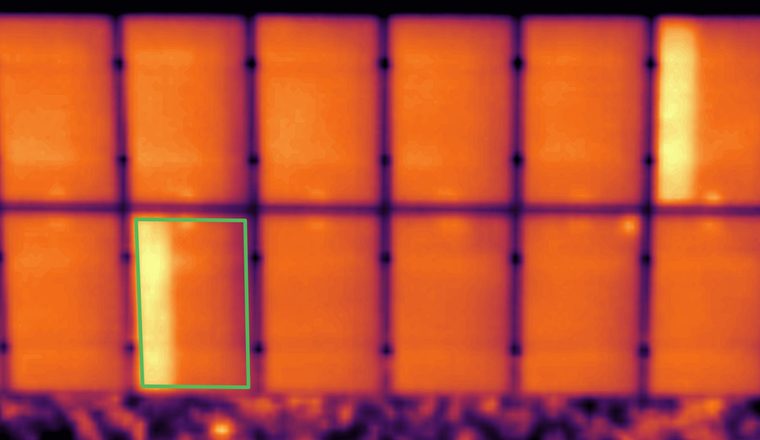
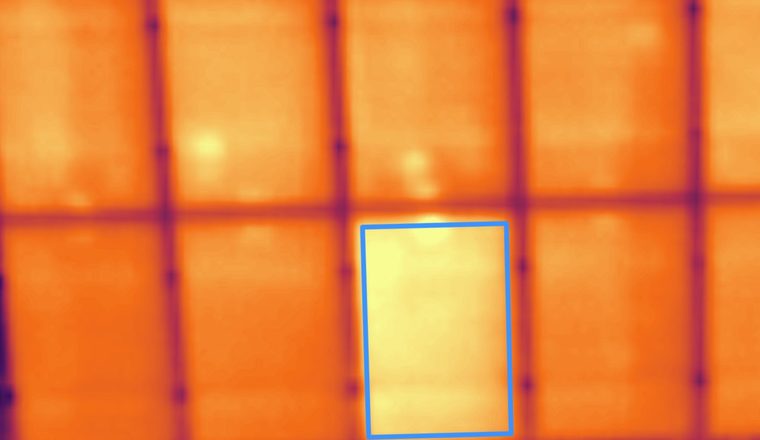
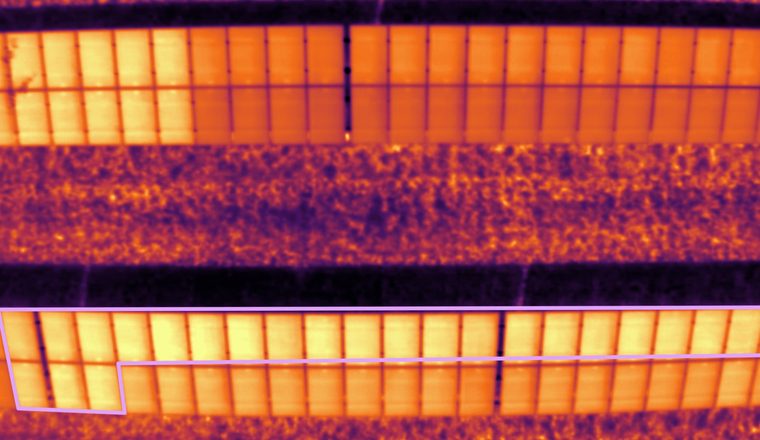
Thermografie Substring-Ausfall PV-Modul – ein Drittel des Moduls überhitzt #02 Ertragsverlust Yield Loss

Substring-Ausfall

Substring Failure

1/3 des Moduls überhitzt
1/3 of module overheated

Ein Drittel des Moduls erscheint deutlich wärmer – ein klar abgegrenzter, rechteckiger Wärmebereich. Typisches Zeichen für eine ausgefallene Bypassdiode.

One third of the module appears significantly warmer — a clearly defined rectangular heat zone. Typical sign of a failed bypass diode.

Ursache
Cause
Defekte Bypassdiode oder Unterbrechung im Substring.
Defective bypass diode or substring interruption.
Behebung
Remedy
Bypassdiode prüfen und tauschen. Anschlussdose kontrollieren.
Check and replace bypass diode. Inspect junction box.
Gefährdung
Risk Level
Mittel – ca. 33 % Ertragsverlust. Kann zu Hotspot eskalieren.
Medium — approx. 33% yield loss. May escalate to hotspot.
Erkennung
Detection
IR-Drohne, ΔT 10–25 K
Thermografie defektes PV-Modul im Leerlauf – gesamtes Modul überhitzt #03 Brandgefahr Fire Risk

Defektes Modul (Komplettausfall)

Defective Module (Total Failure)

Gesamtes Modul überhitzt
Entire module overheated

Das gesamte Modul leuchtet im IR-Bild hell auf – deutlich sichtbar gegenüber allen Nachbarmodulen. Das Modul produziert keinen Strom mehr.

The entire module glows brightly in the IR image — clearly visible against all neighboring modules. The module no longer produces power.

Ursache
Cause
Totaler Zelldefekt, Delaminierung, schwere Kurzschlüsse oder Kontaktunterbrechung.
Total cell defect, delamination, severe short circuits, or contact break.
Behebung
Remedy
Modul sofort stilllegen und austauschen.
Shut down and replace module immediately.
Gefährdung
Risk Level
Hoch – kein Ertrag, thermisches Durchgehen möglich.
High — no yield, thermal runaway possible.
Erkennung
Detection
IR-Drohne, ΔT > 30 K
Thermografie Zellriss PV-Modul – Mikroriss als Wärmeanomalie #04 Degradation Degradation

Zellriss / Mikroriss

Cell Crack / Microcrack

Feine Bruchlinien in Zellen
Fine fracture lines in cells

Einzelne Zellen zeigen unregelmäßige, linienförmige Wärmemuster. Weniger intensiv als Hotspots, aber ein klarer Frühindikator für Degradation.

Individual cells show irregular, linear heat patterns. Less intense than hotspots, but a clear early indicator of degradation.

Ursache
Cause
Mechanische Belastung: Transport, Montage, Hagel, Schneedruck.
Mechanical stress: transport, mounting, hail, snow load.
Behebung
Remedy
Monitoring. Bei Fortschreiten Modul ersetzen.
Monitoring. Replace module if degradation progresses.
Gefährdung
Risk Level
Mittel – schleichender Leistungsverlust, Hotspot-Risiko langfristig.
Medium — gradual power loss, long-term hotspot risk.
Erkennung
Detection
IR-Drohne, EL-Messung, ΔT 5–15 K
Thermografie PID Potentialinduzierte Degradation PV-Modul #05 Ertragsverlust Yield Loss

PID – Potentialinduzierte Degradation

PID – Potential-Induced Degradation

Spannungsbedingte Leistungsminderung
Voltage-induced performance loss

Module am Stringende zeigen ein gleichmäßig erhöhtes Temperaturniveau mit typischem Patchwork-Muster über die Zellflächen.

Modules at the string end show uniformly elevated temperature with a typical patchwork pattern across cells.

Ursache
Cause
Hohe Systemspannung gegen Erde, Feuchtigkeit, mangelhafte Isolation.
High system voltage to ground, moisture, poor insulation.
Behebung
Remedy
PID-Recovery-Box einsetzen. Erdungskonzept prüfen.
Deploy PID recovery box. Check grounding concept.
Gefährdung
Risk Level
Mittel – bis 30 % Verlust, aber reversibel bei Früherkennung.
Medium — up to 30% loss, but reversible if detected early.
Erkennung
Detection
IR-Drohne, IV-Kurve, ΔT 5–15 K
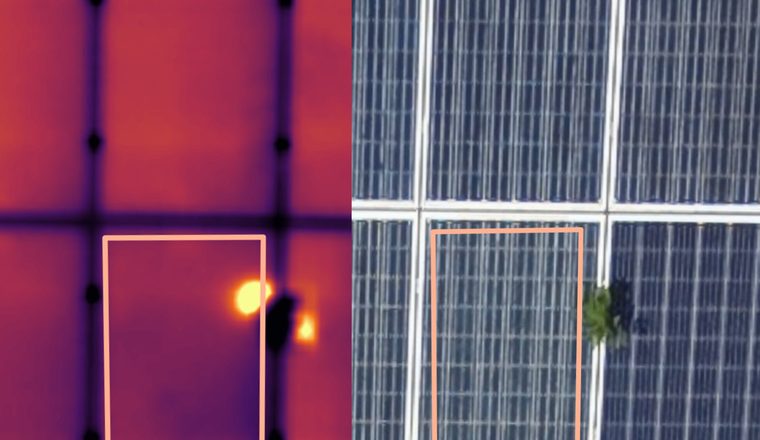
Thermografie Verschmutzung Verschattung PV-Modul im Infrarotbild #06 Leistungsminderung Power Reduction

Verschmutzung / Verschattung

Soiling / Shading

Teilweise verdeckte Zellfläche
Partially covered cell area

Streifenförmige oder fleckige Wärmezonen am Modulrand oder in der unteren Zellreihe. Weniger scharf begrenzt als Zelldefekte.

Stripe-like or patchy heat zones at the module edge or bottom cell row. Less sharply defined than cell defects.

Ursache
Cause
Vogelkot, Laub, Staub, Moos oder bauliche Verschattung.
Bird droppings, leaves, dust, moss, or structural shading.
Behebung
Remedy
Professionelle Reinigung. Verschattungsquelle entfernen.
Professional cleaning. Remove shading source.
Gefährdung
Risk Level
Gering – Ertragsverlust. Langfristig Hotspot-Risiko.
Low — yield loss. Long-term hotspot risk.
Erkennung
Detection
IR-Drohne, Sichtprüfung, ΔT 3–10 K
Thermografie defekte Anschlussdose PV-Modul – Hotspot an Junction Box #07 Brandgefahr Fire Risk

Defekte Anschlussdose

Defective Junction Box

Überhitzter Junction-Box-Bereich
Overheated junction box area

Ein konzentrierter Hotspot direkt im Bereich der Anschlussdose – typischerweise mittig an der langen Modulkante.

A concentrated hotspot directly at the junction box area — typically centered on the long module edge.

Ursache
Cause
Lose Klemmen, korrodierte Kontakte, Feuchteeintritt.
Loose terminals, corroded contacts, moisture ingress.
Behebung
Remedy
Anschlussdose prüfen. Bei Schmorspuren sofort stilllegen.
Inspect junction box. Shut down immediately if burn marks found.
Gefährdung
Risk Level
Hoch – direktes Brandrisiko durch Lichtbogenbildung.
High — direct fire risk due to arc formation.
Erkennung
Detection
IR-Drohne, ΔT > 25 K lokal
Thermografie Stringfehler PV-Anlage – gesamter String überhitzt #08 Ertragsverlust Yield Loss

Stringfehler / Kabeldefekt

String Fault / Cable Defect

Gesamter String leicht überhitzt
Entire string slightly overheated

Eine komplette Modulreihe zeigt ein leicht erhöhtes, gleichmäßiges Temperaturniveau gegenüber benachbarten Strings.

An entire module row shows a slightly elevated, uniform temperature level compared to adjacent strings.

Ursache
Cause
Defekte MC4-Stecker, Kabelbruch, Wechselrichterfehler.
Defective MC4 connectors, cable break, inverter fault.
Behebung
Remedy
Steckverbindungen und Kabel prüfen. WR-Eingang testen.
Check connectors and cables. Test inverter input.
Gefährdung
Risk Level
Mittel – gesamter String liefert weniger. Brandgefahr an Steckern.
Medium — entire string underperforms. Fire risk at connectors.
Erkennung
Detection
IR-Drohne, Kennlinienmessung, ΔT 5–12 K
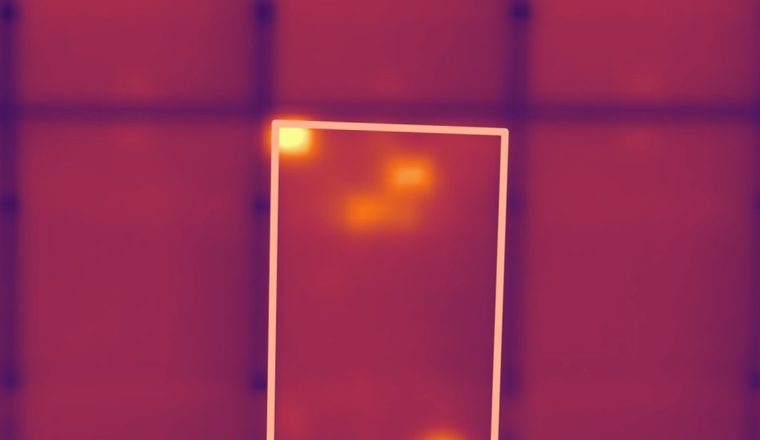
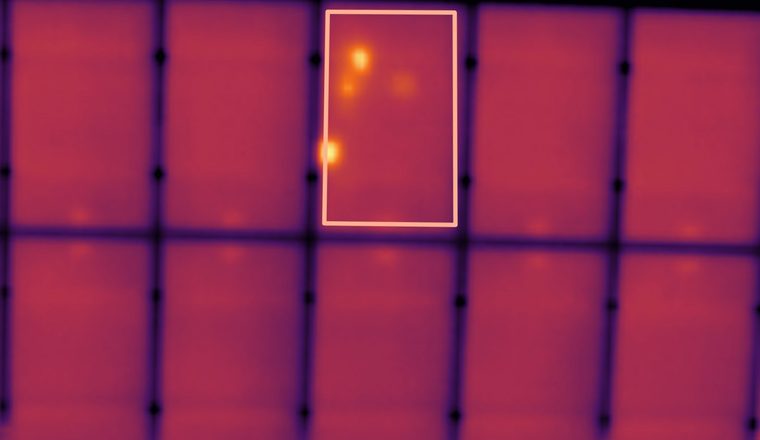
Thermografie Multi-Hotspot PV-Modul – mehrere Hotspots auf einem Modul im Infrarotbild #09 Brandgefahr Fire Risk

Multi-Hotspot

Mehrere Hotspots auf einem Modul
Multiple hotspots on one module

Mehrere helle Wärmepunkte verteilt über ein einzelnes Modul. Deutet auf fortgeschrittene Schädigung mit mehreren defekten Zellen oder Lötverbindungen hin.

Multiple bright heat spots distributed across a single module. Indicates advanced damage with several defective cells or solder joints.

Ursache
Cause
Mehrfache Mikrorisse, Alterung, fehlerhafte Lötverbindungen oder kombinierte Defekte.
Multiple microcracks, aging, faulty solder joints, or combined defects.
Behebung
Remedy
Modul austauschen. Reparatur bei mehreren Hotspots nicht wirtschaftlich.
Replace module. Repair not economical with multiple hotspots.
Gefährdung
Risk Level
Hoch – mehrere Brandquellen, erheblicher Ertragsverlust, sofortiger Handlungsbedarf.
High — multiple ignition sources, significant yield loss, immediate action required.
Erkennung
Detection
IR-Drohne, FLIR, ΔT > 15 K mehrfach

Fehler erkannt? Wir prüfen Ihre Module.

Defects Detected? We Test Your Modules.

Unsere automatisierte Prüflinie bewertet Leistung, Zustand und Restlebensdauer Ihrer PV-Module – schnell, präzise und kosteneffizient. Ideal nach einer Drohneninspektion.

Our automated testing line evaluates performance, condition, and remaining lifetime of your PV modules — fast, precise, and cost-efficient. Ideal after a drone inspection.

Modulprüfung anfragen → Request module testing →

Solar Panel Thermography: Identifying Hotspots and Defects with a Drone

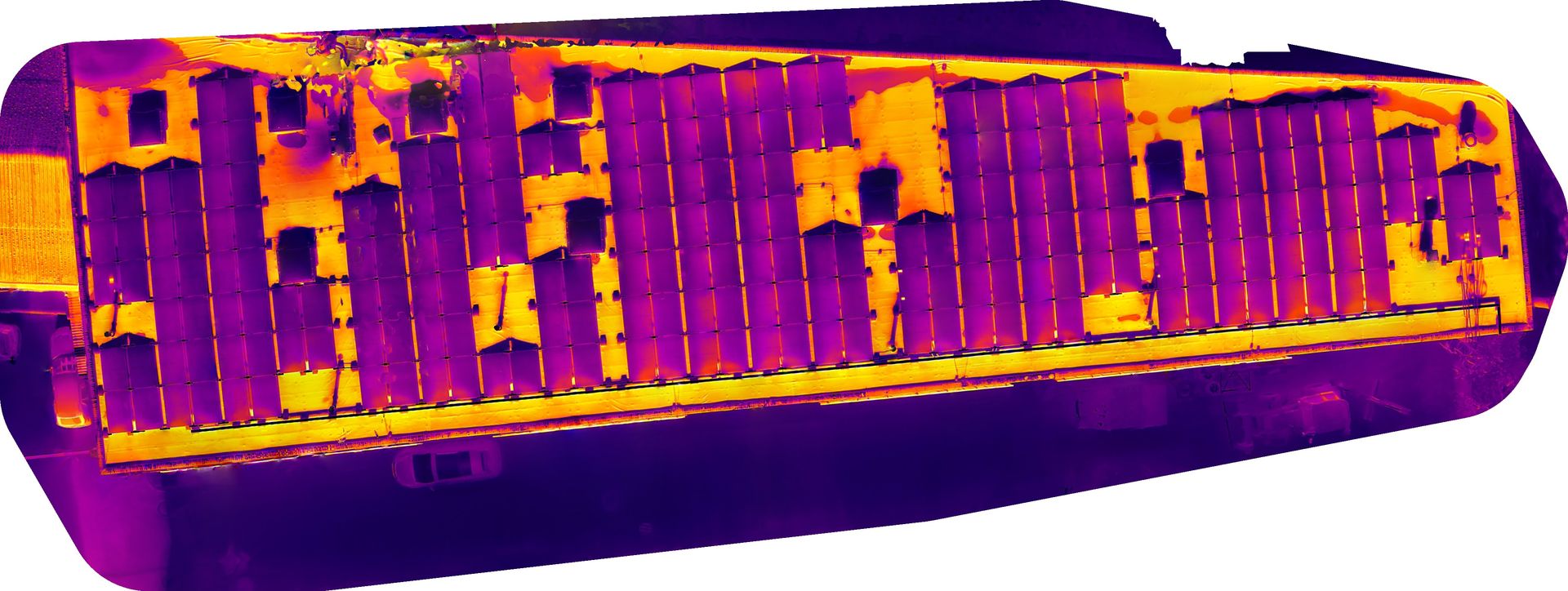
Most defects are barely visible in a standard image—but temperature differences become immediately apparent in a thermal image. In this interactive comparison, move the cursor over the image to control the thermal imaging drone. Identify the hotspot cells caused by partial shading of the PV module.

PV-Anlage Thermographie
● IR-SCAN

Why 2nd Cycle? 

 2nd Cycle does not view thermography in isolation, but rather as part of a comprehensive technical assessment of PV modules and PV systems. Our focus is not merely on capturing thermal images, but on their professional interpretation, the classification of anomalies, and the identification of appropriate next steps. Through our work in PV module testing, damage analysis, reuse, and recycling, we understand how technical anomalies must be evaluated throughout the entire lifecycle of a system.

Technical PV expertise rather than just taking pictures

Focus on error analysis and understanding the causes

Integration into damage analysis, module testing, and further decisions

Practical experience throughout the entire module lifecycle


Request for Drone Thermography for Solar Power Systems

Have your solar power system inspected quickly and efficiently using a drone and thermal imaging.

 Please provide us with the key details—we’ll get back to you shortly with an initial assessment.

Select a category.
Number of PV modules to be tested
If known, please specify the PV module type.
Here you can upload files that help us provide you with a more accurate quote – such as PV module datasheets or other relevant documentation.
We are permitted to store and process your data in accordance with our privacy policy.